
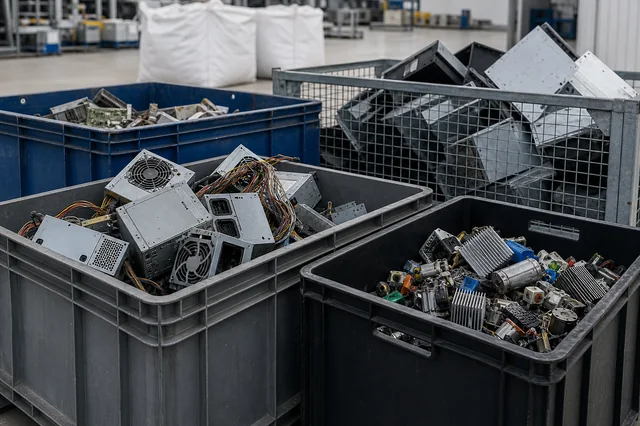
Materials such as ABS, HIPS, and PC/ABS are commonly used in the casings of computers, TVs, and small appliances, and may contain flame retardants, spray coatings, and metal inserts. If different materials are mixed and crushed, it will be difficult to stabilize the performance of subsequent recycled materials.
Material characteristics
- Electronic waste contains metals, engineering plastics, cables and electronic components. The degree of disassembly determines the incoming material boundary of the crushing section.
- Batteries, live parts, compressors, seals and liquid-containing parts cannot be fed directly as ordinary solid waste.
- The crushing target should serve dissociation and sorting. Too fine particles may increase dust, metal loss and difficulty in sorting.
Key processing challenges
- Plastics with similar appearance have different formulas, making it difficult to accurately identify them manually.
- Metal nuts, shields and labels affect purity.
- Older electronic plastics may involve restricted substances and require compliance testing.
Equipment-selection criteria
- Establish procedures for disconnecting power, draining fluids, removing batteries, and identifying hazardous parts before discussing mechanical handling equipment.
- Determine primary volume reduction, secondary dissociation, magnetic separation, eddy current or specific gravity separation routes based on the target metal and plastic components.
- Check the tool wear resistance, temperature rise, dust and target component recovery effects through sample testing.
Typical process flow
At the disassembly end, the casings should be classified by product and material as much as possible, and the metal should be removed before being broken. The discharged materials undergo magnetic separation, screening and necessary material sorting, and then the utilization direction is determined based on the test results.
Information required before project evaluation
Complete information helps us define equipment limits, test plans and the full line accurately:
- E-waste categories, sources and dismantling status
- Maximum dimensions, weight and main material composition
- Condition of batteries, liquids, refrigerants and hazardous parts
- Target recycled metal and plastic quality
- Fluctuations in throughput, shifts and incoming materials
- Dust collection, fire protection, electrical and local compliance requirements