 Request a Solution
Equipment guide · machines and process modules
From primary shredding to a complete resource-recovery process
A line is more than a collection of machines. Define the material, throughput and target product first; then choose the main machine, conveying method, separation sequence and downstream treatment.Equipment Categories
Start with the process duty of each machine
01 / Core capacity reduction equipment
Shredding and crushing equipment
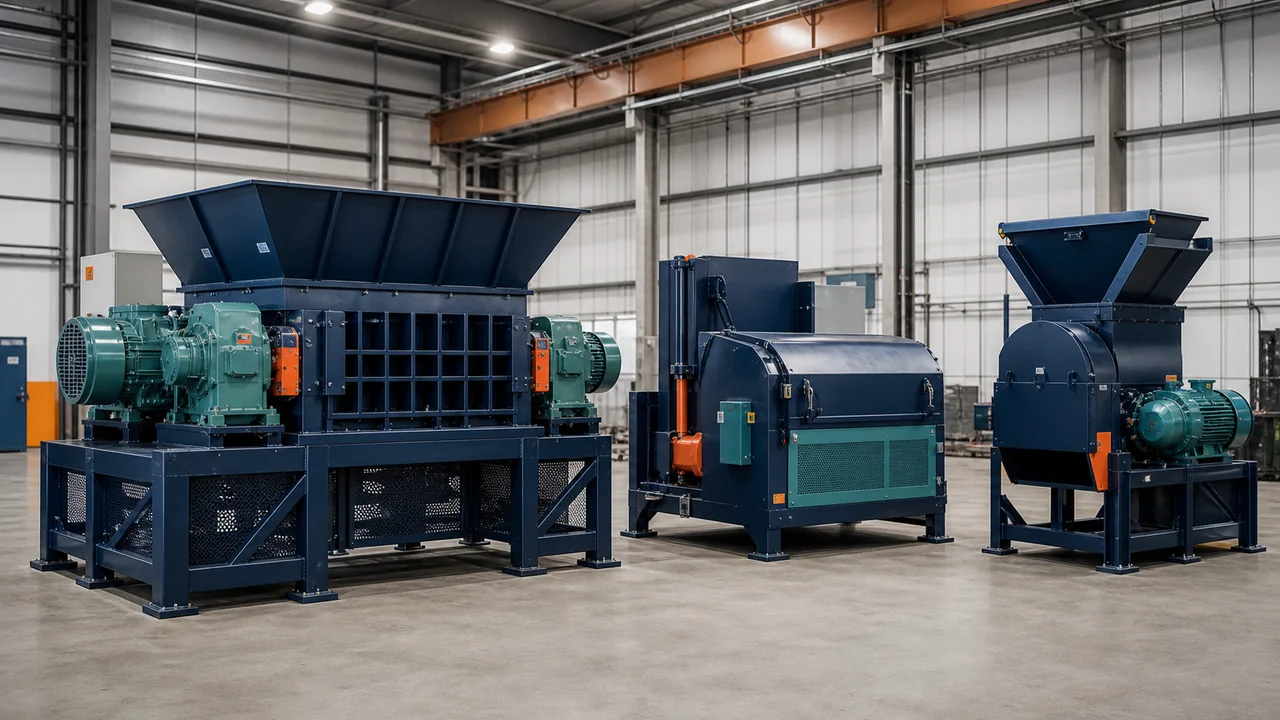
Twin-shaft shredder
Low-speed, high-torque shearingPretreatment of bulk plastics, tires, wood, metal and mixed solid waste
Single-shaft shredder
Hydraulic ram feeding with rotor cuttingFilm, woven bags, plastic blocks, wood and materials that need to control the discharge particle size
Granulator / crusher
High-speed cutting with screen-controlled sizingSecondary reduction after pre-shredding, or direct crushing of dimensionally stable plastics
Wet plastic granulator
Simultaneous size reduction and rinsingFront-end crushing and surface pre-cleaning of dirty film, bottle flakes and other plastic cleaning lines
02 / Continuous feeding and discharging
Feeding and conveying equipment
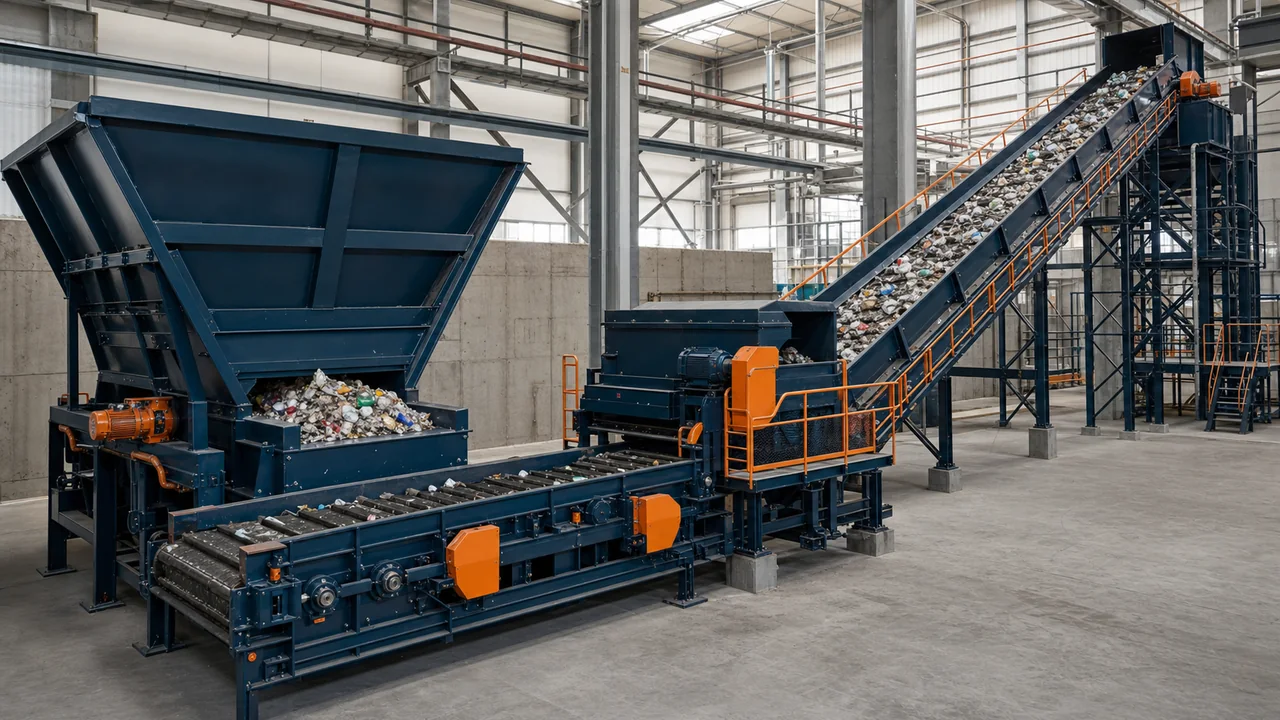
Feed hopper and metered feeding
Buffer incoming materials and stabilize loadReduce surge loads on the primary machine to support continuous production.
Apron conveyor
Carrying heavy, bulky and sharp materialsFront-end loading of tires, bulky waste, metal scraps and thick-walled plastics
Belt conveyor
Continuous transfer of light and medium-sized materialsInter-section transportation of broken materials, plastic chips, wood chips and sorted materials
Product and recirculation conveying
Connecting screening and reprocessingSend qualified materials to the collection end, and return unqualified materials to the crushing link.
03 / Purity and Particle Size Control
Screening and separation equipment
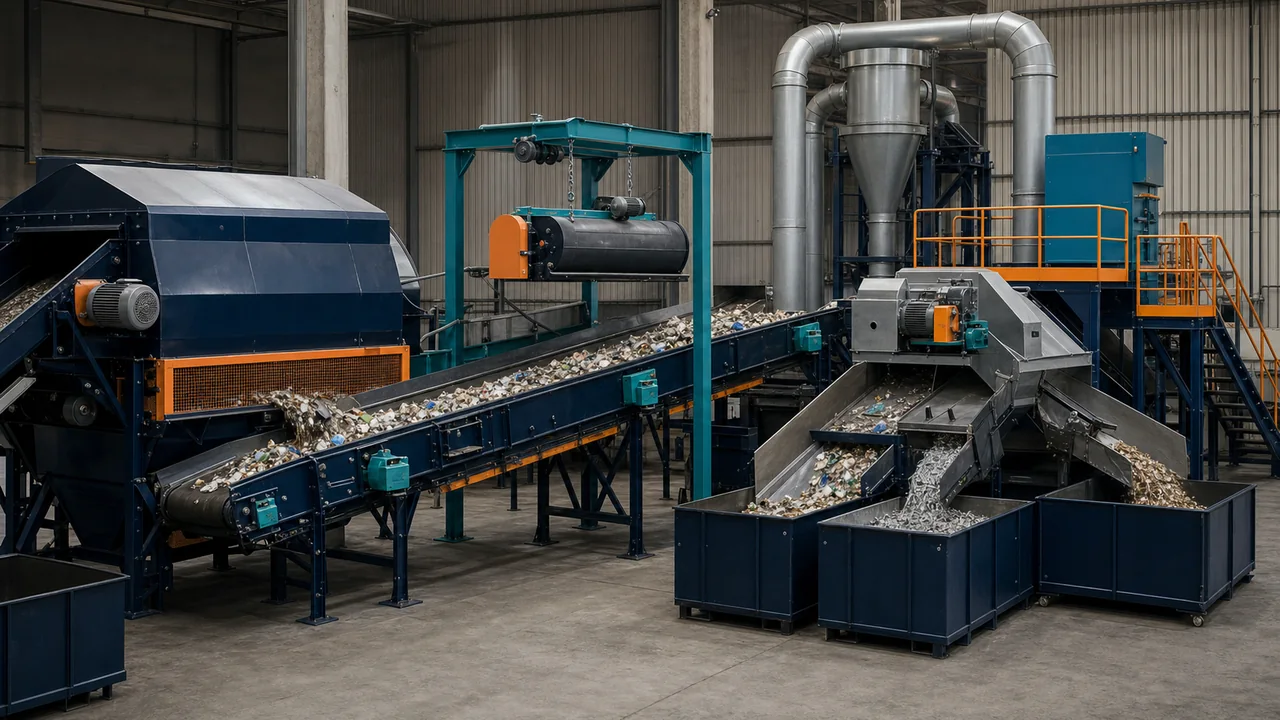
Screening equipment
Classification by particle sizeSeparate fine materials, qualified materials and large particles that need to be returned for reprocessing
Magnetic separator
Recovery of ferrous metalsContinuous removal of iron parts from the crushing mixture, protecting subsequent equipment and recovering metal
Eddy-current separator
Separation of non-ferrous metalsUsed for post-stage sorting of conductive metals and non-metal mixtures such as aluminum and copper
Air / density separation
Separate by density and morphologyRemove fluffy matter or split mixed materials with significant density differences
04 / Plastic cleaning and drying
Washing, dewatering and product-handling equipment
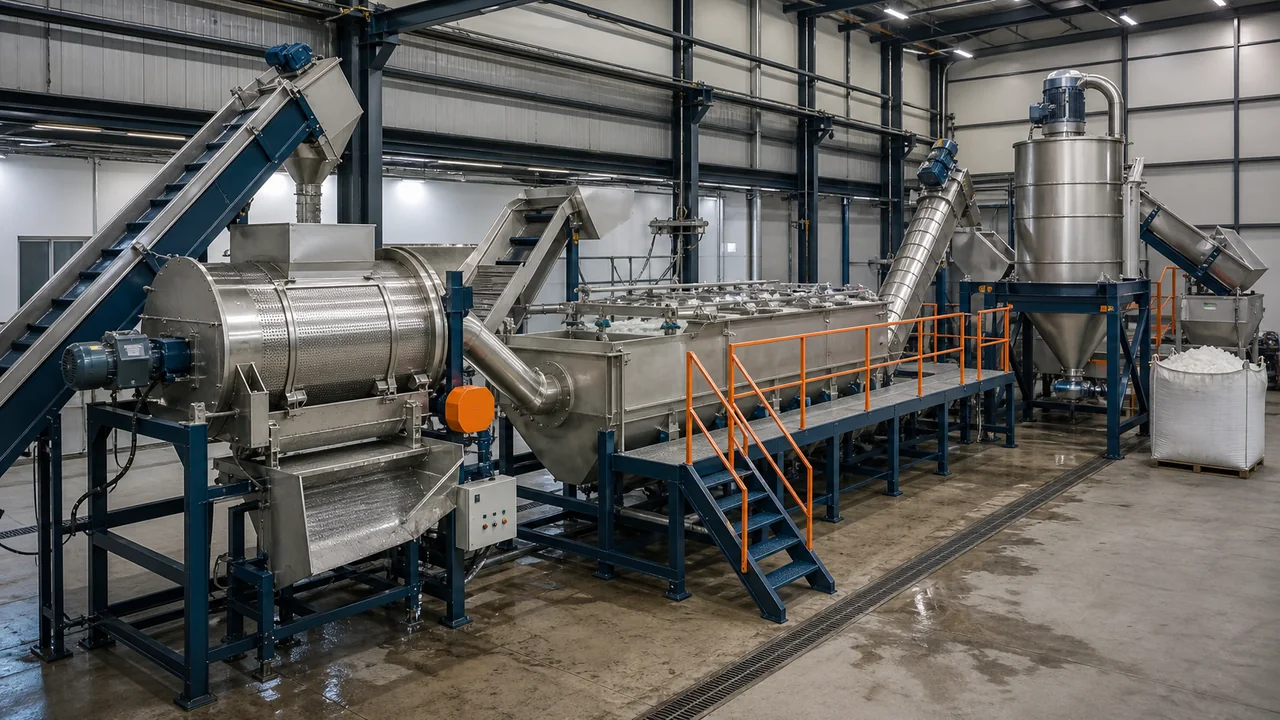
Pre-washing and friction washing
Loose and remove surface contaminantsDealing with sediment, labels, residues and attached contamination
Rinsing and sink-float separation
Cleaning and sorting by densitySeparate different plastics or remove settled impurities while completing rinsing
Dewatering and drying
Reduce water content in the back sectionmechanical dewatering, hot air conveying or combined drying create conditions for storage and granulation
Pelletizing and product collection
Deliverable finished productSelect granulation, flake collection, packaging or silo storage according to the target use
05 / Auxiliary systems and maintenance
Auxiliary systems for stable line operation
Auxiliary systems support safety, continuous operation and maintenance; not every project needs every option.Dust extraction and negative-pressure collection
Control the dust, light objects and fine objects generated by crushing and conveying. The specific air volume and filtration form are designed according to the materials and site conditions.
Electrical control and automation
Link the feeding, host, conveying and sorting equipment, and set up operation logic for load monitoring, interlocking, alarming and easy maintenance.
Cutters, shafts and screens
Match the material, tooth shape, thickness, gap and heat treatment plan according to the equipment structure, material abrasiveness and target particle size.
Maintenance and wear parts
Establish a maintenance list around bearings, seals, scrapers and commonly used fasteners to reduce subsequent downtime.
Preparation before selection
Six data sets to narrow the equipment selection quickly
You do not need every detail at once; send what you have and we can begin the initial assessment.Incoming material information
Material name, form, main ingredients, moisture content and impurities
Dimensions and weight
Regular size, maximum unit size and maximum unit weight
processing target
Hourly processing capacity, work shifts and allowed fluctuation ranges
target product
Expected discharge particle size, purity, moisture content and subsequent utilization method
site conditions
Site size, floor height, electricity, waterways, environmental protection and loading methods
Samples and Records
Material photos, videos, existing process issues and test samples
Equipment and complete-line consultation