
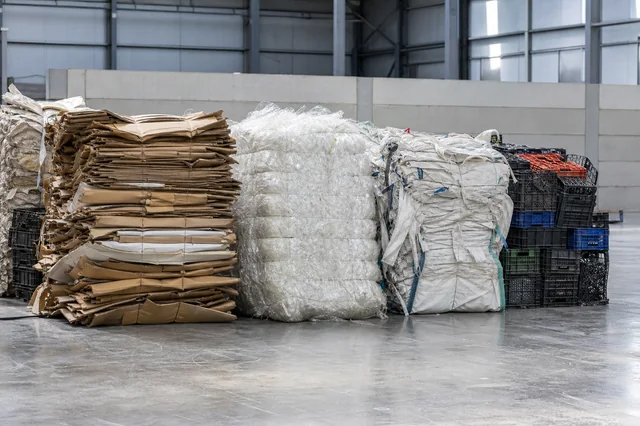
Industrial packaging may be cartons, woven bags, plastic films, aluminum-plastic composite bags or lined containers. If it only says "packaging waste", it is impossible to determine whether the subsequent packaging volume reduction, preparation of sorting materials, or single resin recycling.
Material characteristics
- Industrial solid waste changes with production processes and may be mixed with plastics, rubber, fibers, thin metals, fiberglass and adhesives.
- Rolls, strips and sheets are prone to snagging, and thick blocks and metal inserts can create concentrated loads and wear.
- If the discharge material needs to be returned to production or entered into sorting, particle size distribution and contamination control are usually more important than simple volume reduction.
Key processing challenges
- Thin packaging is fluffy and easily entangled, and the composite layers are difficult to completely detach.
- Food, chemical or powder residues can alter safety and cleaning requirements.
- When paper fibers are mixed with film, fine crushing may produce large amounts of light dust.
Equipment-selection criteria
- Use a bill of materials and representative samples to define normal batches, extreme batches, and foreign matter that must be removed.
- Select a single-shaft, dual-shaft or secondary crushing combination according to the form and objectives, and check the cutter, screen and drive configuration.
- Incorporate cleaning, tool changing, foreign object removal, and wearing parts replacement times into actual availability assessments.
Typical process flow
The items are first classified into clean packaging, packaging containing residues and composite packaging. The volume reduction route can be shredded and packed; the sorting route needs to add screening, air separation or wet separation, depending on the material layer and target product.
Information required before project evaluation
Complete information helps us define equipment limits, test plans and the full line accurately:
- Materials, production sources and proportions of various types
- Maximum size, thickness, form and packing density
- Metal, fiberglass, sand and adhesive conditions
- Normal and peak processing volumes, batch patterns
- Target particle size, fines limits and finished product uses
- Samples, field interfaces and safety information