
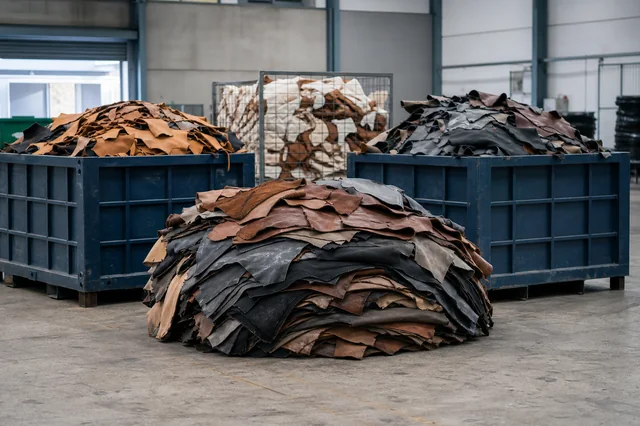
The structures of genuine leather, PU synthetic leather, PVC leather and shoe material composite sheets are different, and there may also be fabric base cloth, foam and glue layer inside the material. If you only look at the thickness when selecting, it is easy to ignore the continuous cutting resistance and heat accumulation.
Material characteristics
- Industrial solid waste changes with production processes and may be mixed with plastics, rubber, fibers, thin metals, fiberglass and adhesives.
- Rolls, strips and sheets are prone to snagging, and thick blocks and metal inserts can create concentrated loads and wear.
- If the discharge material needs to be returned to production or entered into sorting, particle size distribution and contamination control are usually more important than simple volume reduction.
Key processing challenges
- The thickness of the flexible sheet increases exponentially after folding, and the feeding status is unstable.
- Glue and foam may stick to the cutter or block the discharge area.
- Mixing in metal shoe buckles and hard plastic parts changes wear and sorting requirements.
Equipment-selection criteria
- Use a bill of materials and representative samples to define normal batches, extreme batches, and foreign matter that must be removed.
- Select a single-shaft, dual-shaft or secondary crushing combination according to the form and objectives, and check the cutter, screen and drive configuration.
- Incorporate cleaning, tool changing, foreign object removal, and wearing parts replacement times into actual availability assessments.
Typical process flow
The scraps are first classified according to material and metal content, and then enter the shearing equipment assisted by the pressing mechanism. After the discharged material is magnetically separated and screened, it can be further processed according to filling, fuel or other utilization paths.
Information required before project evaluation
Complete information helps us define equipment limits, test plans and the full line accurately:
- Materials, production sources and proportions of various types
- Maximum size, thickness, form and packing density
- Metal, fiberglass, sand and adhesive conditions
- Normal and peak processing volumes, batch patterns
- Target particle size, fines limits and finished product uses
- Samples, field interfaces and safety information