
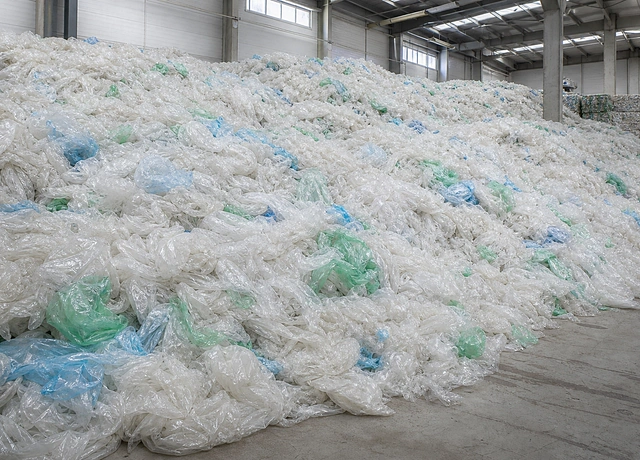
Films, agricultural films, woven bags and ton bags appear to be light, but in their loose state they are large in size and have high friction, and can easily form arch bridges after entering the hopper. Whether the project can continue to operate often depends on the coordination of unpacking, quantitative conveying and material pressing, rather than the speed of the equipment when it is unloaded.
Material characteristics
- Incoming plastic materials often have differences in size, wall thickness, toughness and packing density. The difficulty of processing cannot be judged just by the name of the resin.
- Labels, sediment, metal accessories, oil and moisture content can affect tool wear, cleaning load and finished product quality.
- Volume reduction, external sales, cleaning and granulation, and reuse production have different requirements for discharge size, cleanliness, and fine powder ratio.
Key processing challenges
- Loose films create bridges in the hopper, and clumps of material can cause instantaneous overfeeding.
- Long strips and rope openings can easily wrap around the cutter shaft, and labels and sediment will accelerate wear and increase the cleaning load.
- Water-containing soft materials tend to adhere at transfer points, affecting transportation and subsequent dewatering.
Equipment-selection criteria
- First determine the maximum single piece size, shape and feeding method, and then check the hopper, feed port, pressing structure and conveying rhythm.
- Select the tool structure, driving mode and whether to configure the screen according to the goal of primary volume reduction or subsequent fine crushing, and do not blindly pursue the production of fine materials at one time.
- Use normal incoming materials and extreme incoming materials to test the materials together, record the bite, current, discharging and winding conditions, and then confirm the continuous operation configuration.
Typical process flow
Common processes include unpacking and manual inspection, quantitative transportation, low-speed shredding, and then pre-washing, friction cleaning, rinsing and dewatering. When the agricultural film has a high mud content, pre-washing and sand settling should be moved forward; clean edges can simplify the wet process.
Information required before project evaluation
Complete information helps us define equipment limits, test plans and the full line accurately:
- Plastic types, sources and respective proportions
- Maximum and common dimensions, wall thickness, unit weight
- Metal, sediment, labels and residues
- Hourly throughput, shifts and incoming material fluctuations
- Target discharging, cleaning or granulation requirements
- Feeding method, site, electricity and environmental protection conditions