
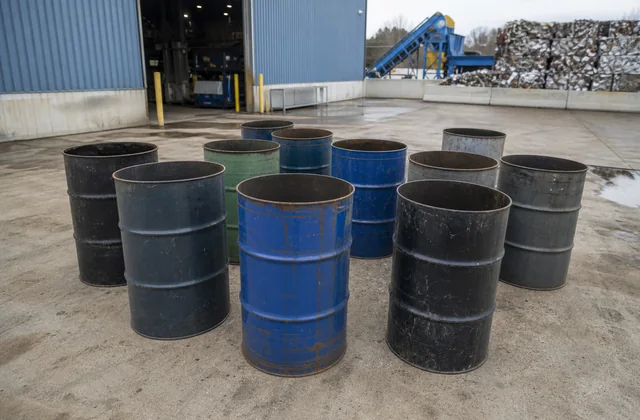
Steel drums, paint buckets and chemical containers may contain flammable vapors or residual liquids even if they appear to be empty. The first step of the project is to establish source traceability and safe disposal processes. Sealed containers cannot be handed over directly to the crusher.
Material characteristics
- Light iron sheets, aluminum products, copper-aluminum mixtures and briquettes have obvious differences in strength, thickness, shape and packing density.
- Long bars, wires and strips can easily become tangled, and closed containers, wetted parts and superhardware can present safety or equipment risks.
- Volume reduction, furnace front material and sorting material have different requirements on the degree of dissociation, discharge size and proportion of fine materials.
Key processing challenges
- Residual combustibles and pressure may cause fire or explosion.
- The strength of the barrel cover, hoop and thick bottom is different, and the load fluctuates greatly.
- Residual liquid can contaminate equipment, floors and subsequent metal products.
Equipment-selection criteria
- Check tools, axis systems, drives and permitted processing boundaries against maximum thickness, cross-section, piece weight and material grade.
- Determine whether to configure screening, magnetic separation, eddy current and manual quality inspection based on the volume reduction or sorting goals.
- Incorporate inspection of sealing parts, removal of super-hard foreign objects, fire protection and maintenance spaces into the entire line plan.
Typical process flow
Containers are first confirmed of origin, emptied, cleaned and vented, and tested according to local regulations. After passing the safety inspection, it enters the volume reduction equipment quantitatively, and the discharged material is magnetically separated or packaged for subsequent metal recycling.
Information required before project evaluation
Complete information helps us define equipment limits, test plans and the full line accurately:
- Types and proportions of ferrous and non-ferrous metals
- Maximum dimensions, thickness, weight and bulk density
- Plastic, rubber, sediment and liquid impurities
- Sealed containers, steel wire and ultra-hardware situations
- Target discharge, sorting method and downstream use
- Throughput, loading, power and safety conditions